 PounceFit
Bioimpedance vs skinfolds: which to use in a body assessment
By PounceFit Team · Updated on
Technical content for health and fitness professionals. It reproduces formulas and protocols published in the scientific literature, with the sources at the end of the page. It is not a recommendation and does not replace the judgment of the professional who runs the assessment.
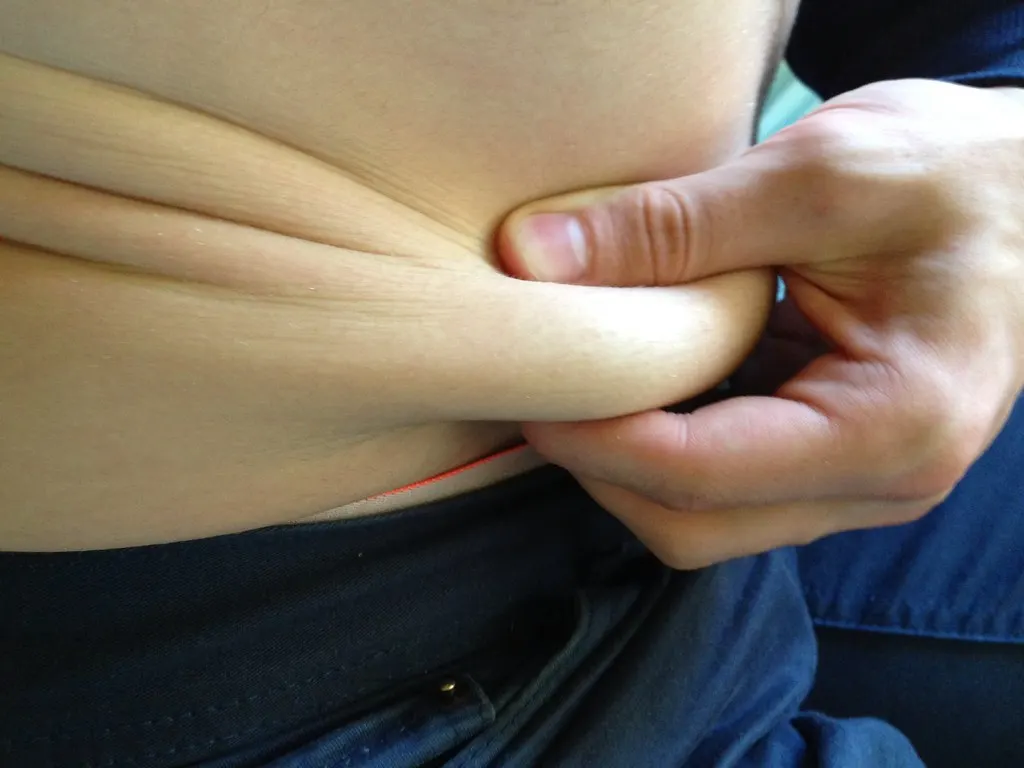
Bioimpedance and skinfolds are field methods that estimate body fat percentage in different ways: skinfolds measure the thickness of skin and the fat beneath it with a caliper, and bioimpedance measures the body's opposition to an electrical current. Both err by a few percentage points against the reference method and depend on different things: skinfolds on the assessor's technique, bioimpedance on the device, the equation and hydration (Heyward and Wagner, 2004; Kyle et al., 2004; Siedler et al., 2023). Results from the two methods do not mix: each client is tracked with the same one every time.
The two methods side by side
| Skinfolds | Bioimpedance | |
|---|---|---|
| What it measures | Thickness of a double fold of skin and subcutaneous fat at standard sites | The body's resistance and reactance to an electrical current |
| How it gets to body fat | Skinfold sum and age go into a body density equation, converted to body fat with the Siri equation (Jackson and Pollock, 1978; Siri, 1961) | An equation estimates fat-free mass from impedance, height, weight, sex and age; fat is the rest of body weight (Kyle et al., 2004, part I) |
| What it depends on | Exact site, pinch technique, caliper and assessor training (Stewart et al., 2011) | Device, an equation suited to the population, fasting, recent exercise and hydration (Kyle et al., 2004, part II) |
| Error against the reference method | About 3 to 4 percentage points (Heyward and Wagner, 2004) | Standard error of 3.1 to 7.5 points across 15 devices (Siedler et al., 2023) |
| Repeatability | Depends on the assessor; each has their own technical error of measurement (Stewart et al., 2011) | High: precision error of 0 to 0.49% between repeated measurements (Siedler et al., 2023) |
What weighs on the choice
Assessor technique. A skinfold is a manual measurement. The ISAK standards exist to reduce the difference between assessors and between measurements by the same assessor (Stewart et al., 2011). With bioimpedance, the assessor has less effect on the reading but must control the measurement conditions.
Client condition. Bioimpedance is more sensitive to the state of the body at the time of measurement. Eating or drinking can lower impedance by 4 to 15 ohms over the following 2 to 4 hours, and right after exercise resistance drops by about 3% and reactance by about 8%, returning to normal within an hour (Kyle et al., 2004, part II). Skinfolds do not depend on fasting or hydration in the same way.
Device. With bioimpedance, the device matters a lot. In the study by Siedler et al. (2023), the mean error of 15 devices against the four-compartment model ranged from 3.5 points under to 11.7 points over, and the authors singled out eight-electrode (hand and foot) devices and some foot-to-foot models as the most useful for tracking change over time. Details in are bioimpedance scales accurate?
Population. Both methods use equations built in specific groups. The Jackson and Pollock equations came from general-population adults in the United States (Jackson and Pollock, 1978). For bioimpedance, ESPEN calls for an equation validated for the age, sex and ethnicity of the person assessed, and does not recommend routine use at extreme BMI or with abnormal hydration (Kyle et al., 2004, part II).
Raw data. Skinfolds leave a simple raw number: the sum in millimeters, which also tracks change without going through the equation (Heyward and Wagner, 2004). With bioimpedance, the raw data is the impedance in ohms.
Why results should not be mixed
Each method departs from the reference value in a different way, and that departure changes from device to device and from equation to equation (Siedler et al., 2023; Heyward and Wagner, 2004). If a client had skinfolds at one assessment and a scale at the next, the difference between the two numbers may come only from the method. To track progress, compare the same method, with the same device or caliper and the same assessor.
Both methods in PounceFit
PounceFit, the body assessment software, works with both. When creating an assessment, the professional picks skinfolds (with a protocol) or a bioimpedance scale, and the method does not change afterward. Progress charts keep the methods apart, and different scales are not mixed either.
For skinfolds, see how to calculate body fat with calipers and the Jackson & Pollock 7-site calculator. For the other side, see bioimpedance: what it is and how it works.
Frequently asked questions
Which is more accurate, bioimpedance or skinfolds?
It depends on the device and the assessor. Well-measured skinfold equations err by about 3 to 4 percentage points against the reference method (Heyward and Wagner, 2004). Among 15 bioimpedance devices tested against the four-compartment model, the standard error ranged from 3.1 to 7.5 points, depending on the device (Siedler et al., 2023).
Can I use the scale at one assessment and the caliper at the next?
The numbers will not be comparable. Each method departs from the reference value in its own way: for bioimpedance, the mean error of the devices ranged from 3.5 points under to 11.7 points over (Siedler et al., 2023). A difference between two assessments done with different methods may come from the method, not the client.
Can I use both methods with the same client?
Yes, as long as each method keeps its own history. In PounceFit, each assessment uses either skinfolds or a scale, and the progress charts never mix the two.
Sources
- Kyle UG, Bosaeus I, De Lorenzo AD, Deurenberg P, Elia M, Gómez JM, et al. Bioelectrical impedance analysis, part I: review of principles and methods. Clinical Nutrition. 2004;23(5):1226-1243. doi:10.1016/j.clnu.2004.06.004
- Kyle UG, Bosaeus I, De Lorenzo AD, Deurenberg P, Elia M, Gómez JM, et al. Bioelectrical impedance analysis, part II: utilization in clinical practice. Clinical Nutrition. 2004;23(6):1430-1453. doi:10.1016/j.clnu.2004.09.012
- Siedler MR, Rodriguez C, Stratton MT, Harty PS, Keith DS, Green JJ, et al. Assessing the reliability and cross-sectional and longitudinal validity of fifteen bioelectrical impedance analysis devices. British Journal of Nutrition. 2023;130(5):827-840. doi:10.1017/S0007114522003749
- Heyward VH, Wagner DR. Applied body composition assessment. 2nd ed. Champaign: Human Kinetics; 2004.
- Jackson AS, Pollock ML. Generalized equations for predicting body density of men. British Journal of Nutrition. 1978;40(3):497-504. doi:10.1079/BJN19780152
- Siri WE. Body composition from fluid spaces and density: analysis of methods. In: Brožek J, Henschel A, editors. Techniques for measuring body composition. Washington: National Academy of Sciences; 1961. p. 223-244.
- Stewart A, Marfell-Jones M, Olds T, de Ridder H. International standards for anthropometric assessment. Lower Hutt: International Society for the Advancement of Kinanthropometry; 2011.