 PounceFit
Body circumferences: how to measure them in a body assessment
By PounceFit Team · Updated on
Technical content for health and fitness professionals. It reproduces formulas and protocols published in the scientific literature, with the sources at the end of the page. It is not a recommendation and does not replace the judgment of the professional who runs the assessment.
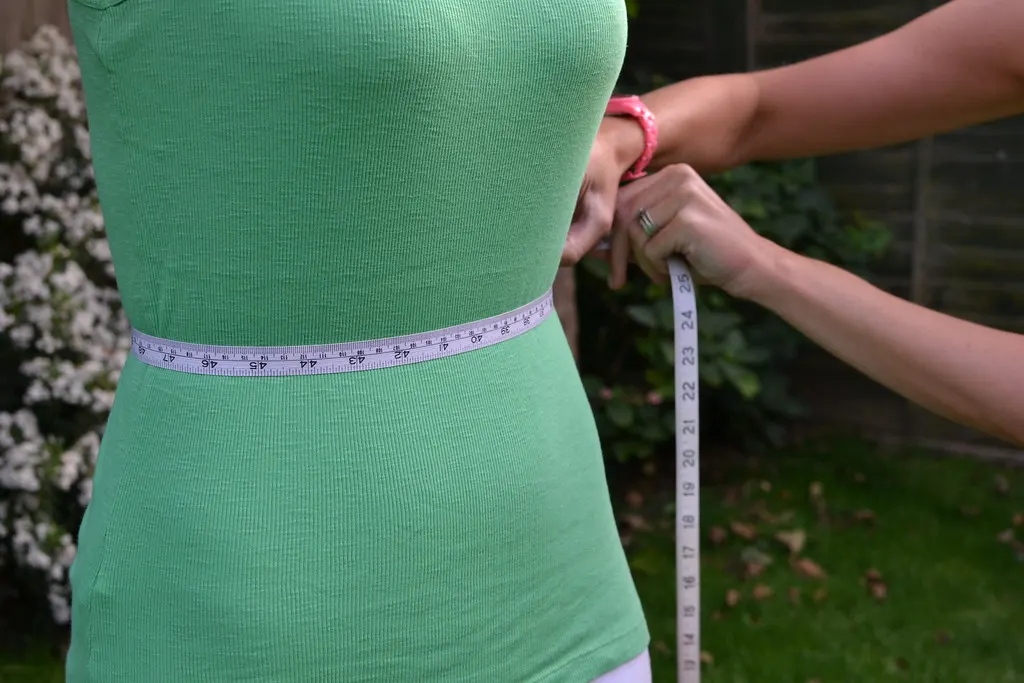
Body circumferences (girths) are measured with a tape at defined anatomical sites on the trunk and limbs. They track changes in the size of each segment, feed ratios such as the waist-to-hip ratio and, combined with skinfolds, estimate muscle mass (Lee et al., 2000). The measurement is fast and cheap, but it is only comparable between assessments when the site, technique and assessor stay the same (Stewart et al., 2011).
To record the measurements on paper, the printable body assessment form has fields for girths. In PounceFit, body assessment software for personal trainers, each girth is recorded for the right and left sides.
Equipment and technique
Use a flexible, non-stretch tape, ideally a narrow steel one, with a blank stub before the zero mark (Stewart et al., 2011). Sewing tapes stretch with use and lose calibration.
Basic ISAK technique (Stewart et al., 2011):
- The tape sits perpendicular to the long axis of the segment, with no twist.
- The tape touches the skin all the way around without indenting the tissue.
- The client stands relaxed, with weight spread evenly over both feet.
- For trunk girths, read at the end of a normal exhalation.
- Read in centimeters, to one decimal place.
Take two measurements at each site, in rotation (go through all sites and return to the first), and use the mean. If the two differ by more than 1%, take a third and use the median (Stewart et al., 2011).
Where to measure
The table lists the sites PounceFit uses and the reference for each.
| Girth | Measurement site | Note |
|---|---|---|
| Arm | Midpoint between the acromion and the olecranon, arm relaxed at the side | Same site as the triceps skinfold (ACSM, 2021) |
| Forearm | Maximum circumference, forearm relaxed | ISAK (Stewart et al., 2011) |
| Chest | Mesosternale level (nipple line), at the end of exhalation | ISAK (Stewart et al., 2011) |
| Waist | Narrowest circumference between the lowest rib and the iliac crest | ISAK standard. WHO uses the midpoint between the two (WHO, 2011) |
| Abdomen | Level of the navel | Separate from the waist in PounceFit |
| Hip | Maximum circumference over the buttocks | WHO (2011) and ISAK (Stewart et al., 2011) |
| Upper thigh | Just below the gluteal fold | ISAK (Stewart et al., 2011) |
| Mid-thigh | Midpoint between the inguinal crease and the proximal border of the patella | Same site as the thigh skinfold (ACSM, 2021). ISAK defines mid-thigh by other bony landmarks |
| Calf | Maximum circumference of the leg | ISAK (Stewart et al., 2011) |
Measuring the girth at the same site as the skinfold has a practical reason: the corrected girth, described below, only makes sense when the skinfold and the circumference are taken at the same level.
Waist-to-hip ratio
Waist-to-hip ratio = waist girth ÷ hip girth
WHO links a substantially increased metabolic risk to a waist above 102 cm (40 in) in men and 88 cm (35 in) in women, and to a waist-to-hip ratio of 0.90 or more in men and 0.85 or more in women (WHO, 2011). These cutoffs were set with the waist measured at the midpoint between rib and iliac crest. If you measure at the narrowest point, the value tends to be slightly lower, and the comparison with the cutoff loses precision. Record which standard you used.
Skinfold-corrected girth
The tape measures muscle, bone and fat together. To remove the subcutaneous fat, subtract the skinfold taken at the same site, treating the limb as a cylinder (Lee et al., 2000):
Corrected girth (cm) = girth (cm) − π × skinfold (mm) ÷ 10
Dividing by 10 converts the skinfold from millimeters to centimeters. PounceFit calculates corrected arm girth (with the triceps skinfold), corrected thigh girth (with the thigh skinfold) and corrected calf girth (with the calf skinfold), and uses all three in the skeletal muscle mass equation of Lee et al. (2000):
Muscle mass (kg) = height (m) × (0.00744 × corrected arm² + 0.00088 × corrected thigh² + 0.00441 × corrected calf²) + 2.4 × sex − 0.048 × age + ethnicity + 7.8
Sex is 1 for men and 0 for women. The ethnicity term is 0 for Whites and Hispanics, 1.1 for African Americans and −2.0 for Asians (Lee et al., 2000). The equation was developed in adults with a BMI below 30.
Worked example
A 30-year-old White man, 1.78 m (5 ft 10 in). Right-side girths: arm 32.0 cm, mid-thigh 55.0 cm and calf 37.0 cm. Skinfolds at the same level: triceps 12 mm, thigh 15 mm and calf 10 mm.
- Corrected arm = 32.0 − 3.1416 × 1.2 = 28.23 cm.
- Corrected thigh = 55.0 − 3.1416 × 1.5 = 50.29 cm.
- Corrected calf = 37.0 − 3.1416 × 1.0 = 33.86 cm.
- Squares: 28.23² = 796.9; 50.29² = 2,528.9; 33.86² = 1,146.4.
- Bracket: 0.00744 × 796.9 + 0.00088 × 2,528.9 + 0.00441 × 1,146.4 = 5.929 + 2.225 + 5.056 = 13.210.
- Muscle mass = 1.78 × 13.210 + 2.4 − 0.048 × 30 + 0 + 7.8 = 23.514 + 2.4 − 1.44 + 7.8 = 32.3 kg.
PounceFit reaches 32.27 kg with these numbers. The equation has a standard error of estimate of 2.2 kg (Lee et al., 2000), so read the result as a range, not an exact value.
How to track change
- Same conditions. Same time of day, same side, same tape and, if possible, the same assessor. Avoid measuring right after training, when the muscle is pumped.
- Assessor error. Calculate your own technical error of measurement from repeated measurements (Stewart et al., 2011). Changes smaller than that error are not change.
- Look at the whole picture. A single girth says little. A smaller waist with stable corrected arm and thigh girths tells a different story from every girth dropping together.
- Proportionality. PounceFit shows the Z-score of each girth against the Phantom model, adjusted for height, to compare segments across people of different sizes.
Girths alone do not estimate body fat. For that, combine them with skinfolds, as in the Jackson & Pollock 7-site protocol, and run the numbers in the 7-site skinfold calculator.
Frequently asked questions
Is the waist measured at the navel or at the narrowest point?
It depends on the standard. WHO measures at the midpoint between the lowest palpable rib and the iliac crest (WHO, 2011). ISAK measures at the narrowest point between the lowest rib and the iliac crest (Stewart et al., 2011). At the level of the navel, the usual name is abdominal circumference. PounceFit records the waist at the narrowest point and the abdomen at the navel, as two separate measurements.
Should I measure the right side or the left?
ISAK standardizes the right side (Stewart et al., 2011). PounceFit has fields for both sides on the limbs, but the calculations that use girths (corrected girth, Lee muscle mass and Phantom score) use the right side. Always measure the same side at reassessments.
How much does a circumference need to change before I count it as a change?
More than the assessor's measurement error. Each assessor has their own technical error of measurement, calculated from repeated measurements on the same client (Stewart et al., 2011). Differences of a few millimeters between two assessments usually fall within that error and should not be treated as real change.
Can I measure over clothing?
It is not recommended. The tape should sit on the skin without compressing the tissue (Stewart et al., 2011). If you ever need to measure over thin clothing, note it and repeat the same condition at reassessments.
Sources
- Stewart A, Marfell-Jones M, Olds T, de Ridder H. International standards for anthropometric assessment. Lower Hutt: International Society for the Advancement of Kinanthropometry; 2011.
- World Health Organization. Waist circumference and waist-hip ratio: report of a WHO expert consultation, Geneva, 8-11 December 2008. Geneva: WHO; 2011.
- Lee RC, Wang Z, Heo M, Ross R, Janssen I, Heymsfield SB. Total-body skeletal muscle mass: development and cross-validation of anthropometric prediction models. American Journal of Clinical Nutrition. 2000;72(3):796-803. doi:10.1093/ajcn/72.3.796
- American College of Sports Medicine. ACSM's guidelines for exercise testing and prescription. 11th ed. Philadelphia: Wolters Kluwer; 2021.