 PounceFit
 PT
 EN

Technical content for health and fitness professionals. It reproduces formulas and protocols published in the scientific literature, with the sources at the end of the page. It is not a recommendation and does not replace the judgment of the professional who runs the assessment.
The basal metabolic rate (BMR) calculator estimates how many calories the body burns per day at rest, using three equations: Mifflin-St Jeor (1990), Harris-Benedict revised by Roza and Shizgal (1984) and Katch-McArdle, which uses fat-free mass. The three give estimates that differ from one another for the same person, as the example below shows. In the comparison by Frankenfield, Roth-Yousey and Compher (2005), Mifflin-St Jeor was the most reliable in adults with and without obesity. Prescribing a diet and a calorie target is the dietitian's job.
Who it is for
Healthy adults. The Mifflin-St Jeor equation was built with 498 people aged 19 to 78, with normal weight and with obesity (Mifflin and colleagues, 1990). The revised Harris-Benedict combined the original data from Harris and Benedict (1918) with those of another group published by Benedict, with a wider age range (Roza and Shizgal, 1984). Katch-McArdle needs the body fat percentage, which can come from a skinfold or circumference assessment.
Formula
Mass in kg, height in cm, age in years, result in kcal per day.
Mifflin-St Jeor (Mifflin and colleagues, 1990):
- Men: BMR = 10 × mass + 6.25 × height - 5 × age + 5
- Women: BMR = 10 × mass + 6.25 × height - 5 × age - 161
Revised Harris-Benedict (Roza and Shizgal, 1984):
- Men: BMR = 88.362 + 13.397 × mass + 4.799 × height - 5.677 × age
- Women: BMR = 447.593 + 9.247 × mass + 3.098 × height - 4.330 × age
Katch-McArdle (McArdle, Katch and Katch, 2001):
- Fat-free mass = mass × (1 - body fat ÷ 100)
- BMR = 370 + 21.6 × fat-free mass
Worked example
Man, 30 years old, 80 kg, 180 cm, 15% body fat.
- Mifflin-St Jeor: 10 × 80 + 6.25 × 180 - 5 × 30 + 5 = 800 + 1,125 - 150 + 5 = 1,780 kcal/day.
- Revised Harris-Benedict: 88.362 + 13.397 × 80 + 4.799 × 180 - 5.677 × 30 = 88.362 + 1,071.76 + 863.82 - 170.31 = 1,854 kcal/day.
- Katch-McArdle: fat-free mass = 80 × 0.85 = 68 kg. BMR = 370 + 21.6 × 68 = 1,839 kcal/day.
The three fall between 1,780 and 1,854 kcal/day, a 74 kcal difference just from the choice of equation.
Limitations
- It is an estimate. Mifflin-St Jeor was the most reliable in the review by Frankenfield, Roth-Yousey and Compher (2005), but the authors point out relevant errors in individuals, and older adults and ethnic minorities were poorly represented in the studies.
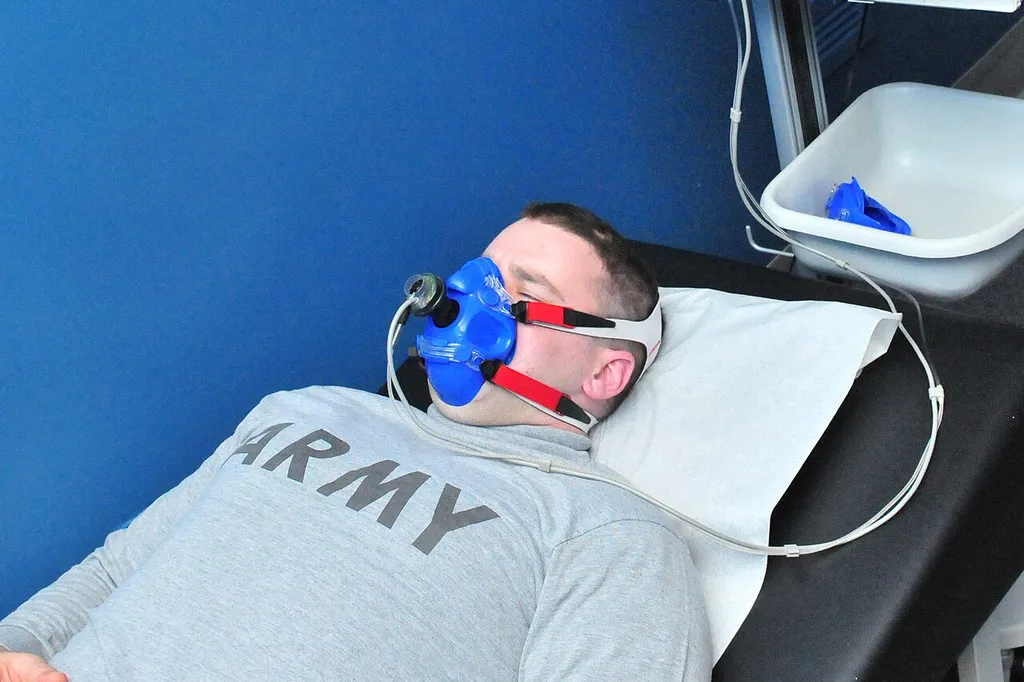
- Direct measurement by indirect calorimetry removes the equation error (Frankenfield, Roth-Yousey and Compher, 2005).
- In the review by Roza and Shizgal (1984), Harris-Benedict estimated resting expenditure within about 14% in well-nourished people and was not reliable in malnourished patients.
- BMR is not the total expenditure of the day: it does not include physical activity or digestion. Defining how much the client should eat is the dietitian's role.
The body fat percentage for Katch-McArdle can come from the Jackson and Pollock 3-site calculator or the body fat from circumferences calculator. The origin and accuracy of each equation are in basal metabolic rate equations. For those who see clients in a clinic, see body assessment for dietitians.
Frequently asked questions
Which basal metabolic rate equation is the most accurate?
In a systematic review of adults with and without obesity, the Mifflin-St Jeor equation was the one that most often predicted measured resting expenditure within 10% and had the narrowest error range (Frankenfield, Roth-Yousey and Compher, 2005). Even so, it is quite off for some people.
When should I use the Katch-McArdle equation?
When you have a good estimate of body fat percentage, because it uses fat-free mass instead of total weight. If the body fat percentage is wrong, the error passes straight into the metabolic rate.
Is basal metabolic rate the amount of calories the client should eat?
No. It estimates resting expenditure, without physical activity or digestion. The meal plan and the calorie target are set by the dietitian, who considers total expenditure, lab tests and each person's history.
Sources
- Mifflin MD, St Jeor ST, Hill LA, Scott BJ, Daugherty SA, Koh YO. A new predictive equation for resting energy expenditure in healthy individuals. American Journal of Clinical Nutrition. 1990;51(2):241-247. doi:10.1093/ajcn/51.2.241
- Harris JA, Benedict FG. A biometric study of human basal metabolism. Proceedings of the National Academy of Sciences of the United States of America. 1918;4(12):370-373. doi:10.1073/pnas.4.12.370
- Roza AM, Shizgal HM. The Harris Benedict equation reevaluated: resting energy requirements and the body cell mass. American Journal of Clinical Nutrition. 1984;40(1):168-182. doi:10.1093/ajcn/40.1.168
- McArdle WD, Katch FI, Katch VL. Exercise physiology: energy, nutrition, and human performance. 5th ed. Philadelphia: Lippincott Williams & Wilkins; 2001.
- Frankenfield D, Roth-Yousey L, Compher C. Comparison of predictive equations for resting metabolic rate in healthy nonobese and obese adults: a systematic review. Journal of the American Dietetic Association. 2005;105(5):775-789. doi:10.1016/j.jada.2005.02.005